Agadir is one of Morocco’s most popular beach destinations. Its long sandy shore, generous sunshine and Atlantic coastline opening onto varied landscapes make it an ideal base for discovering outstanding beaches, surf villages and quieter coves from north to south.
Between Agadir Bay and the nearby coast, more than a hundred kilometres of shoreline unfold — and every stop has a different mood. Some beaches are walkable from the city centre, but the best beaches near Agadir sit along the coastal road north toward Taghazout and Imsouane, or south toward Tifnit. To enjoy them properly, car rental in Agadir lets you shape each day freely and pull over whenever a stretch of coast catches your eye.
Agadir, a modern city between ocean and Amazigh culture
Entirely rebuilt after the devastating 1960 earthquake, Agadir is a planned city of wide avenues, with an active fishing port, a lively marina and the Kasbah Oufella — a restored hilltop fortress overlooking the bay with an exceptional panoramic view of the coastline. A cable car now links the lower town to the hill, so the climb is accessible without effort.
Despite its modern face, Agadir keeps a deeply rooted Amazigh identity, visible in its markets, cafés, craftspeople and neighbourhood names. That dual character — a contemporary Atlantic city and the cultural heritage of the Souss — gives Agadir a distinctive place among Morocco’s major destinations.
What to do in central Agadir?
Away from the sand, the city centre offers plenty of visits that fit easily into a stay. Most are done on foot or by taxi from the corniche, leaving the car free for coastal road-trip days.
City-centre highlights:
- Climb to the Kasbah Oufella for panoramic views of the bay and the rebuilt city;
- Stroll the corniche and its ocean-facing terraces;
- Visit Souk El Had, one of Morocco’s largest covered markets, for spices, textiles and Souss crafts;
- Explore the municipal museum of Amazigh heritage;
- Discover the Médina d’Agadir Polizzi, an artistic medina rebuilt on the hill, reflecting traditional Souss architecture;
- Wander Talborjt and its lively cafés;
- Head to the Founty district and the marina at sunset.
These stops pair well with a beach day or an excursion along the coastal road.
Why is Agadir famous for its beaches?
Agadir’s beach reputation rests on several natural strengths. The bay is oriented to catch sunshine for much of the year — more than three hundred sunny days on average. Atlantic swell is usually moderate here, which makes the main beach suitable for everyone, including families with young children.
What really sets the region apart, though, is coastal variety. Heading north, you move from Agadir’s urban beach to the local shore at Anza, Banana Beach near Aourir, the surf breaks of Imourane, the iconic village of Taghazout and the wide bay of Imsouane. Southward, the coast grows wilder and Tifnit offers a solitude you no longer find in Agadir itself.
That range makes the Agadir coast one of Morocco’s most rewarding stretches for a beach road trip — especially when you have a car to link each stop at your own pace.
What are the best beaches in and around Agadir?
Here are eight beaches and coastal areas not to miss around Agadir, listed from the centre outward.
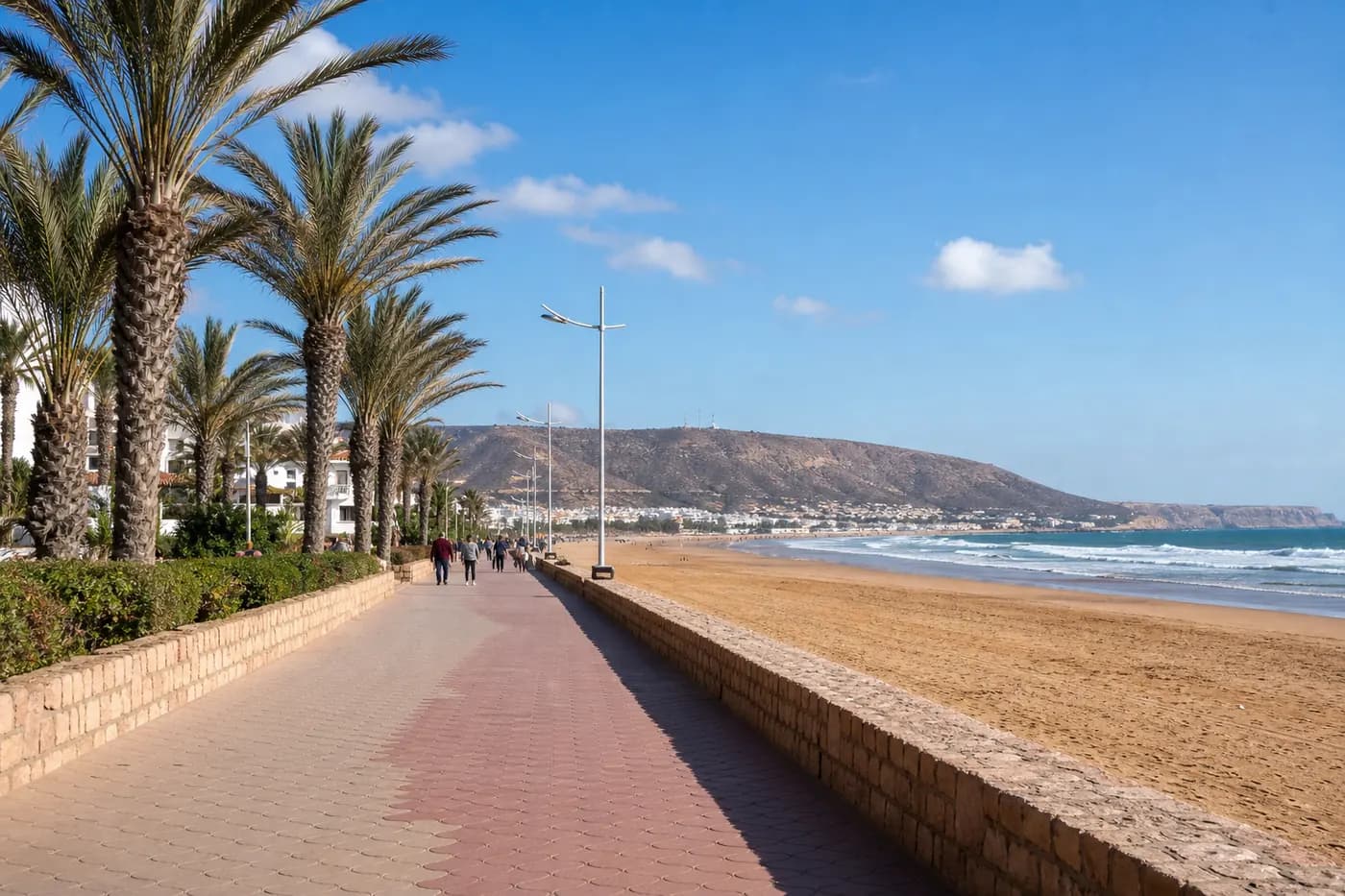
1. Agadir’s main beach
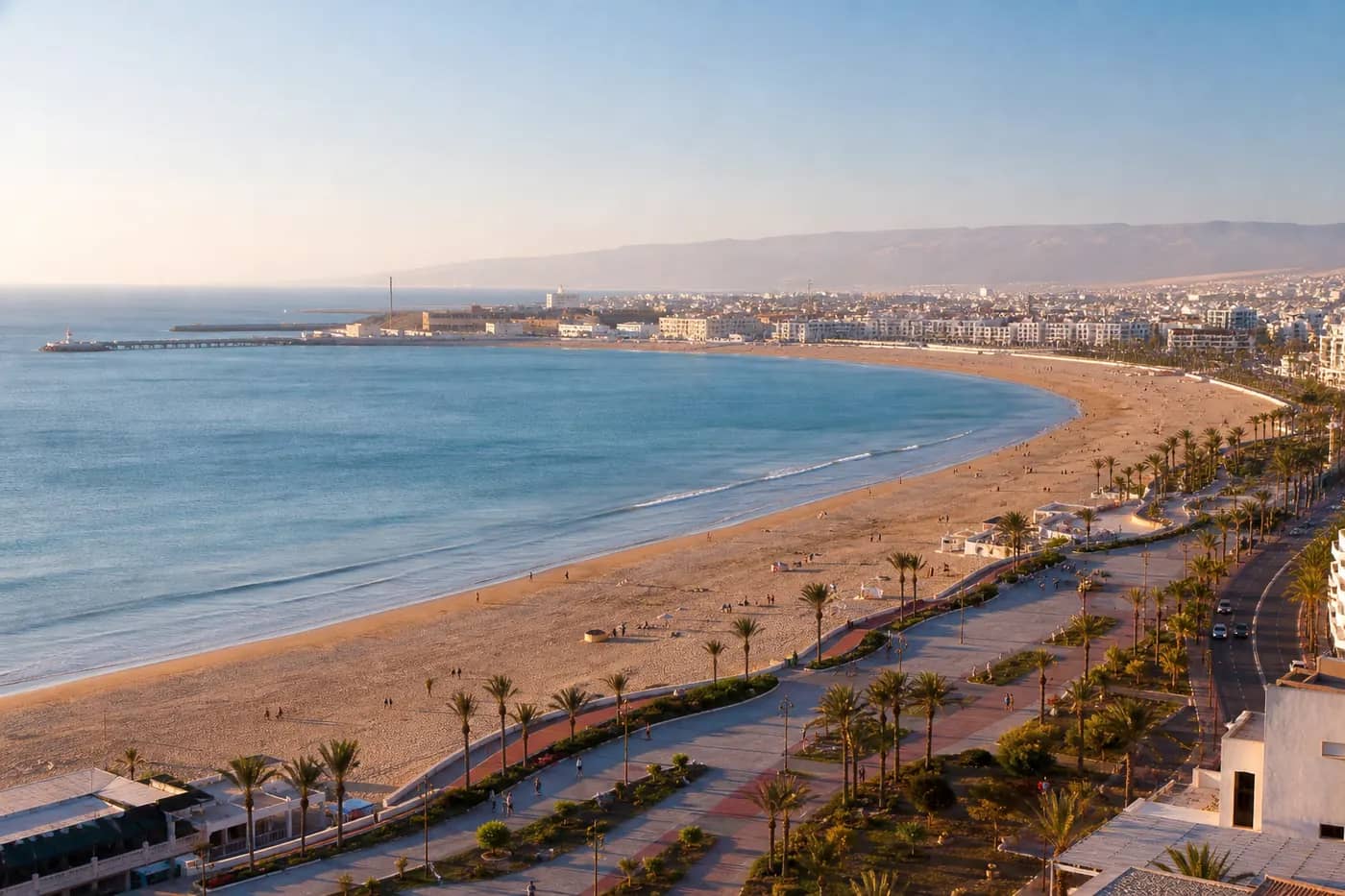
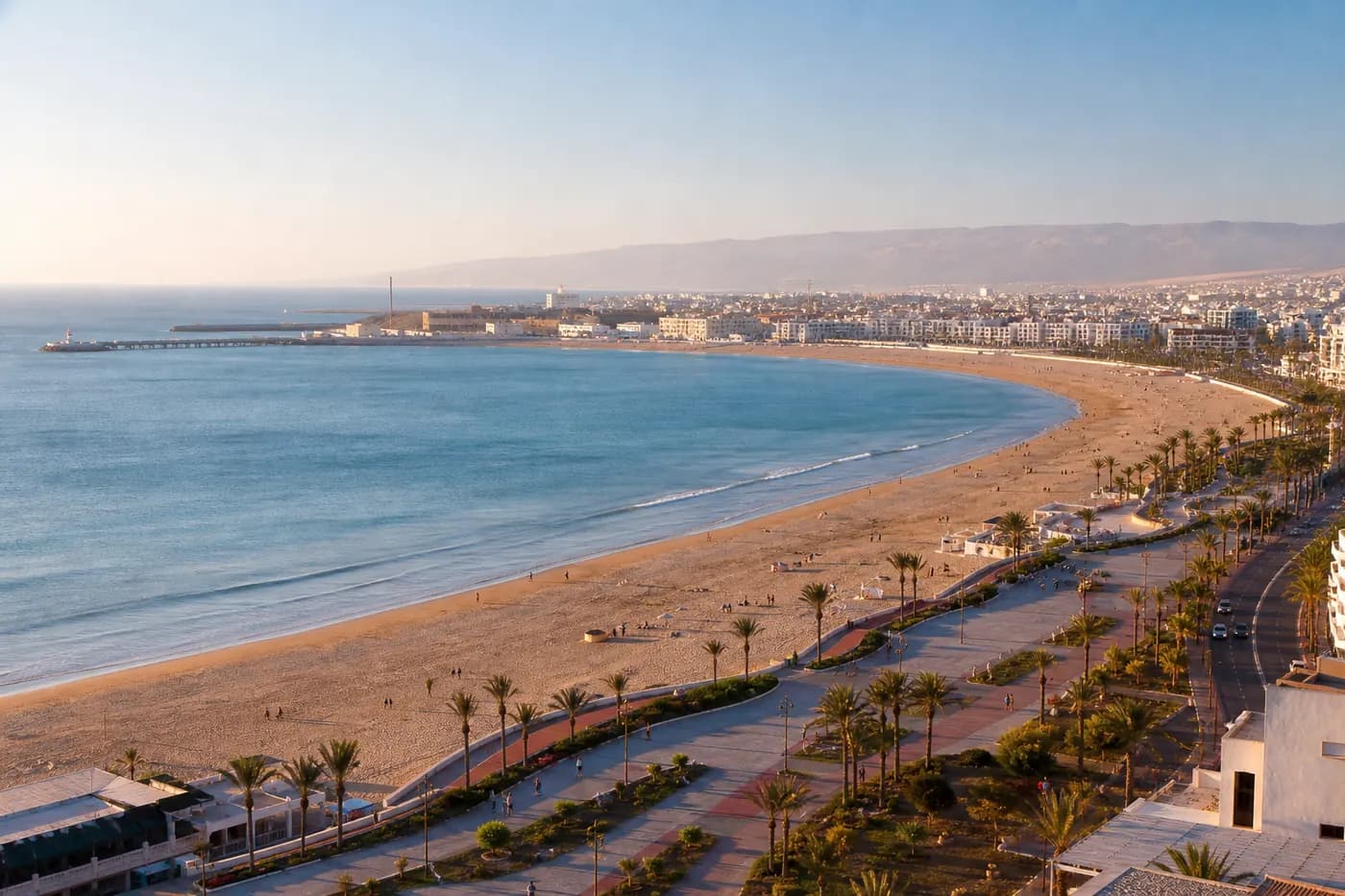
Agadir beach runs for about ten kilometres, from the northern bay to the approaches of the port. Wide, lined by the corniche and its many terraces, it is the easiest beach of all: most central hotels are only a few minutes’ walk away. The sand is fine and well kept, the sea relatively calm, and seasonal facilities — sunbeds, showers, lifeguards — are in place.
The northern stretch toward Founty cove is quieter than the central zone where terraces and street vendors concentrate. In the evening, the corniche comes alive with restaurants and cafés facing the Atlantic sunset.
When is the best time to visit Agadir beach?
In peak season (July–August), the main beach is busy from 10 a.m. For sand without the crowds, arrive before 9 a.m. or return late afternoon, when low light turns the Atlantic gold. Sea breeze usually picks up in early afternoon, so the first morning hours are the most pleasant for a family swim. The corniche stays lively into the evening and makes a pleasant walk at any time of day.
2. Anza beach
Just north of Agadir’s port, Anza beach is used mainly by local residents, which gives it a very different feel from the tourist buzz of the corniche. The sand is darker, the waves a little more active, and the setting stays natural without the facilities of the central beach.
Anza suits travellers looking for an authentic atmosphere with fewer tourists. Neighbourhood families come late in the day, and a few small local cafés serve tea or cactus juice with a sea view. It pairs easily with a morning visit to Agadir’s fishing port.
3. Banana Beach near Aourir
About fifteen kilometres north of Agadir, the village of Aourir is known for its banana market — one of the Souss-Massa region’s signature products. The shore below, nicknamed Banana Beach, mixes sand, pebbles and smaller waves that draw both swimmers and beginner surfers looking for a gentler spot than Taghazout.
The setting feels more natural than Agadir: little infrastructure, ochre cliffs behind and clear water. Passing through Aourir on a Sunday, market day, lets you buy bananas and fresh fruit straight from local growers before heading down to the beach.
4. Imourane beach and Devil’s Rock
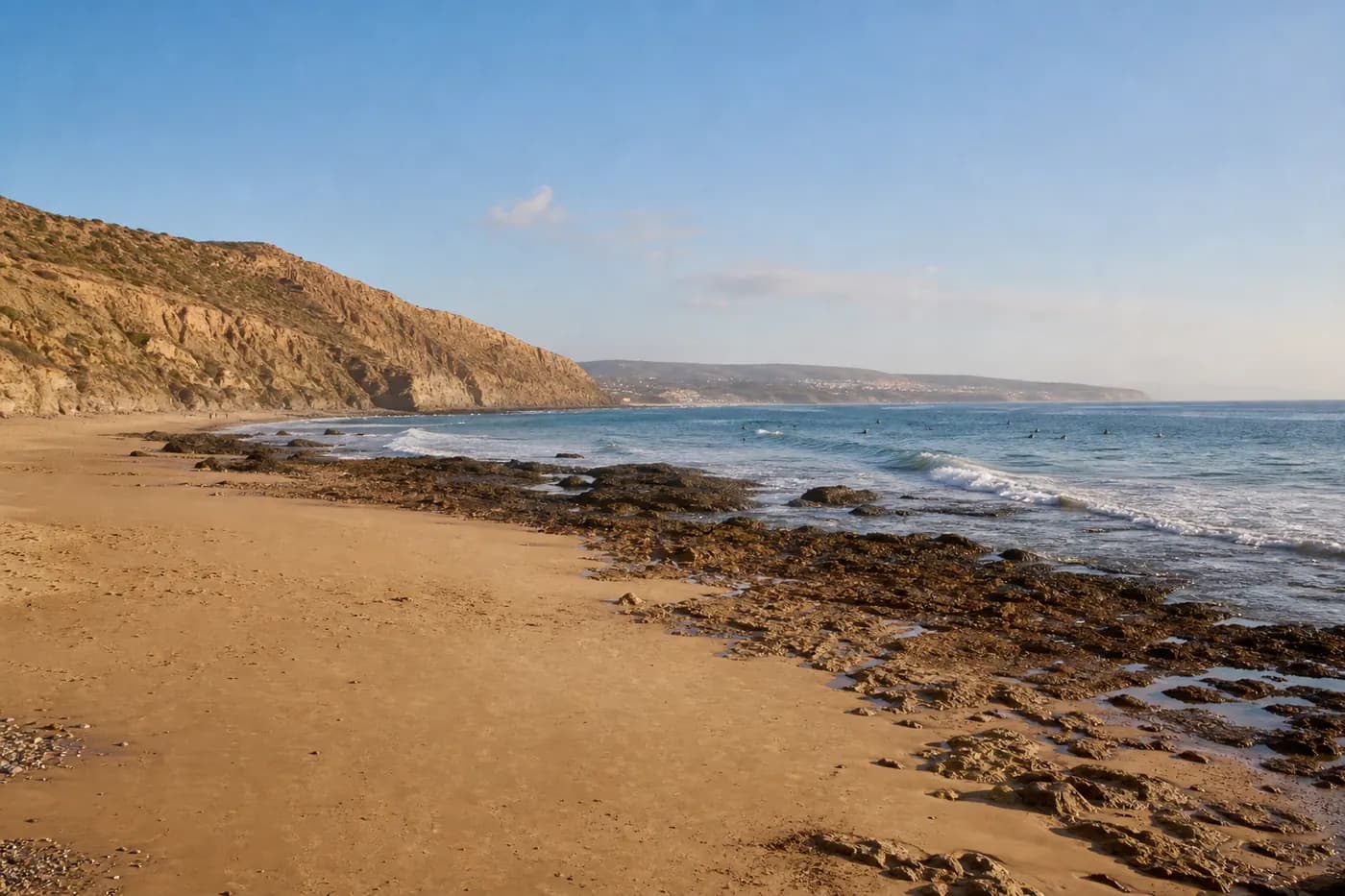
Between Aourir and Taghazout, the village of Imourane borders a spectacular rocky coast broken by small sand and pebble beaches. The highlight is Devil’s Rock (Rocher du Diable), a massive geological formation pounded by Atlantic waves and photographed from the cliff edge by visitors from around the world.
Facing the rock and the sea, up on the heights of Imourane, Le Navire Imourane is a fish and seafood restaurant with a direct view of the ocean and the rock — a memorable stop after a morning of surfing or a walk along the rocky coast between Imourane and Tamraght.
The stretch between Tamraght and Imourane draws experienced surfers and travellers who prefer to step away from Taghazout’s busier scene. Rental apartments are growing in these villages, attracting guests who want a more local, quieter atmosphere.
5. Taghazout, the iconic surf village
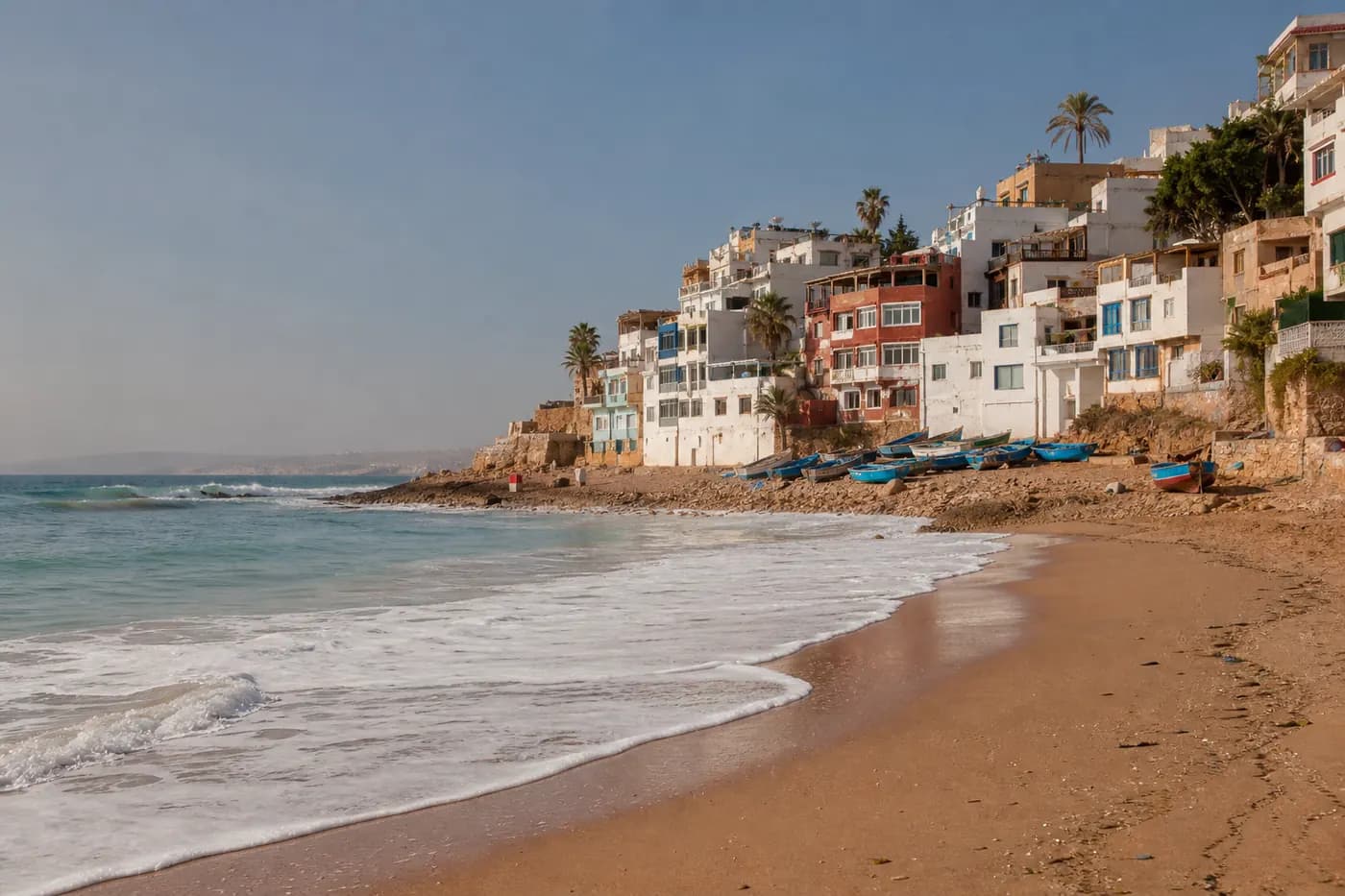
About twenty kilometres north of Agadir, Taghazout has become one of Morocco’s premier surf destinations. Colourful houses clinging to the cliff, a lively fishing harbour and rooftop terrace cafés give it a unique charm on this coast. Sport tourism has changed the village, yet it still keeps a fishing-village soul — boats on the sand and locals who continue artisanal fishing.
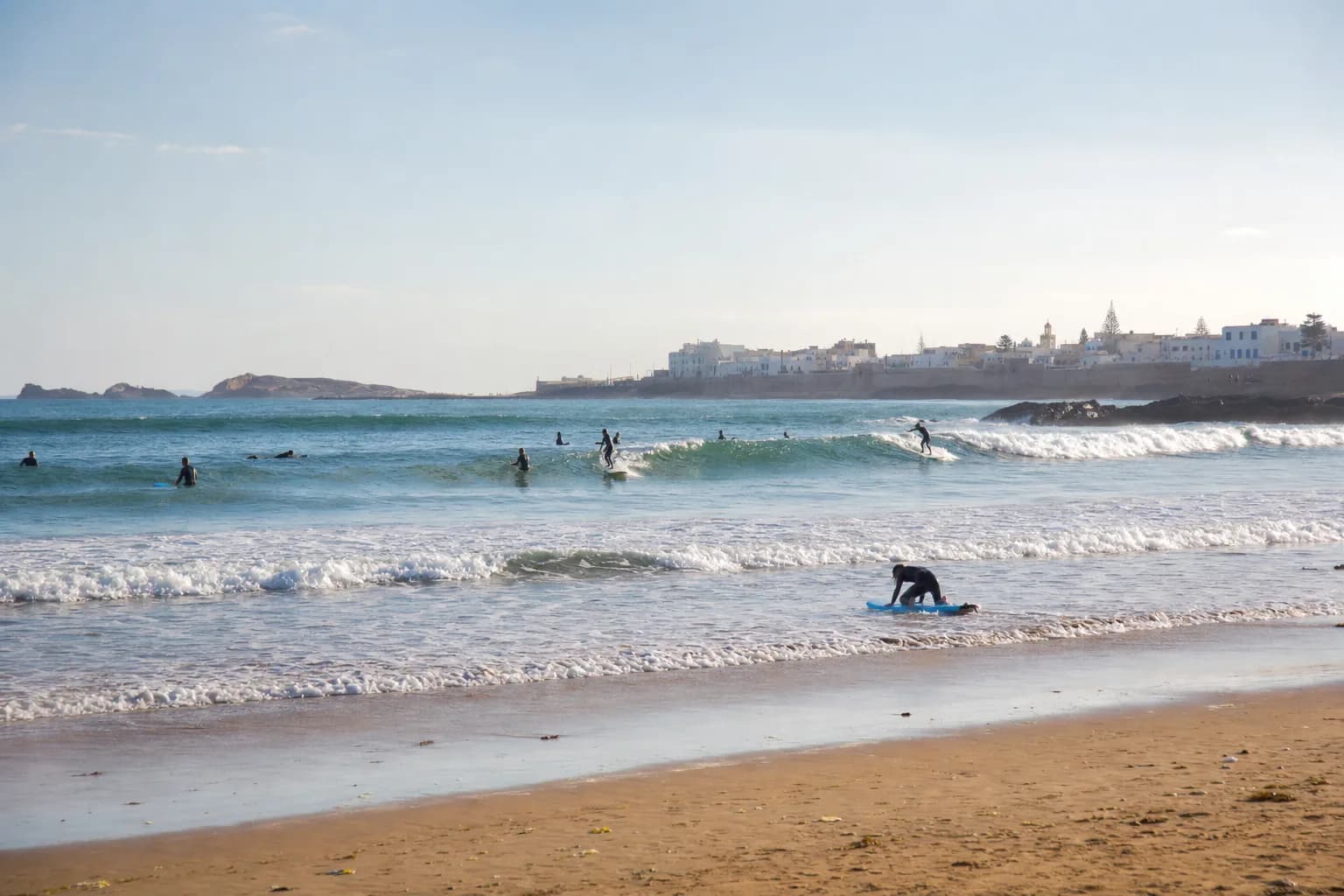
Surf spots around Taghazout — Hash Point, Panoramas, Killers — suit intermediate to advanced surfers. Beginners and families usually head for the more accessible beach breaks south of the village. Many surf schools and camps offer lessons and full stays, and accommodation for every budget has expanded in recent years.
Is Taghazout only for surfers?
No. Surf may be the headline activity, but Taghazout also appeals to non-surfers. Walking the colourful lanes, sitting on a terrace facing the Atlantic, watching surfers from the rocks or simply enjoying sunset from the village point are pleasures open to everyone. The cosmopolitan, relaxed mood draws travellers of all kinds, from yoga guests to families on holiday. From Agadir, the drive takes about thirty minutes along the coastal road.
6. Imi Ouaddar, a beach popular with families
North of Taghazout, Imi Ouaddar offers beaches with generally calmer water than some neighbouring surf spots. Swell is often gentler, which makes it a strong choice for swimmers, children and families. Its sand, space and quieter mood contrast with the busier zones further south.
The area also has tourist facilities and family-friendly activities. It is a good place to spend several hours, have lunch by the sea, then continue toward Tamri or the Timlalin dunes before returning to Agadir.
7. Imsouane, between bay and fishing village
About one and a half to two hours from Agadir, Imsouane is a small fishing village whose bay is famous worldwide for its long wave — a ride that can unroll for more than two hundred metres. That rare phenomenon attracts surfers of all levels looking for an extended session, as well as a bohemian community that values the relaxed atmosphere and distance from mass tourism.
Imsouane’s main bay, with relatively sheltered water, is also ideal for swimmers and families. A second spot on the village’s rocky point suits experienced surfers seeking stronger waves. The village itself has stayed simple: a few cafés, modest lodgings and a fishing harbour that is still active.
How to plan a day trip to Imsouane?
Leave early in the morning, allow enough fuel and check road conditions. Once there, visitors can walk near the harbour, watch the fishermen, enjoy the beach and lunch on seafood before driving back to Agadir. Allow roughly one and a half to two hours each way, depending on traffic, the route and stops along the way.
8. Tifnit, a fishing village south of Agadir
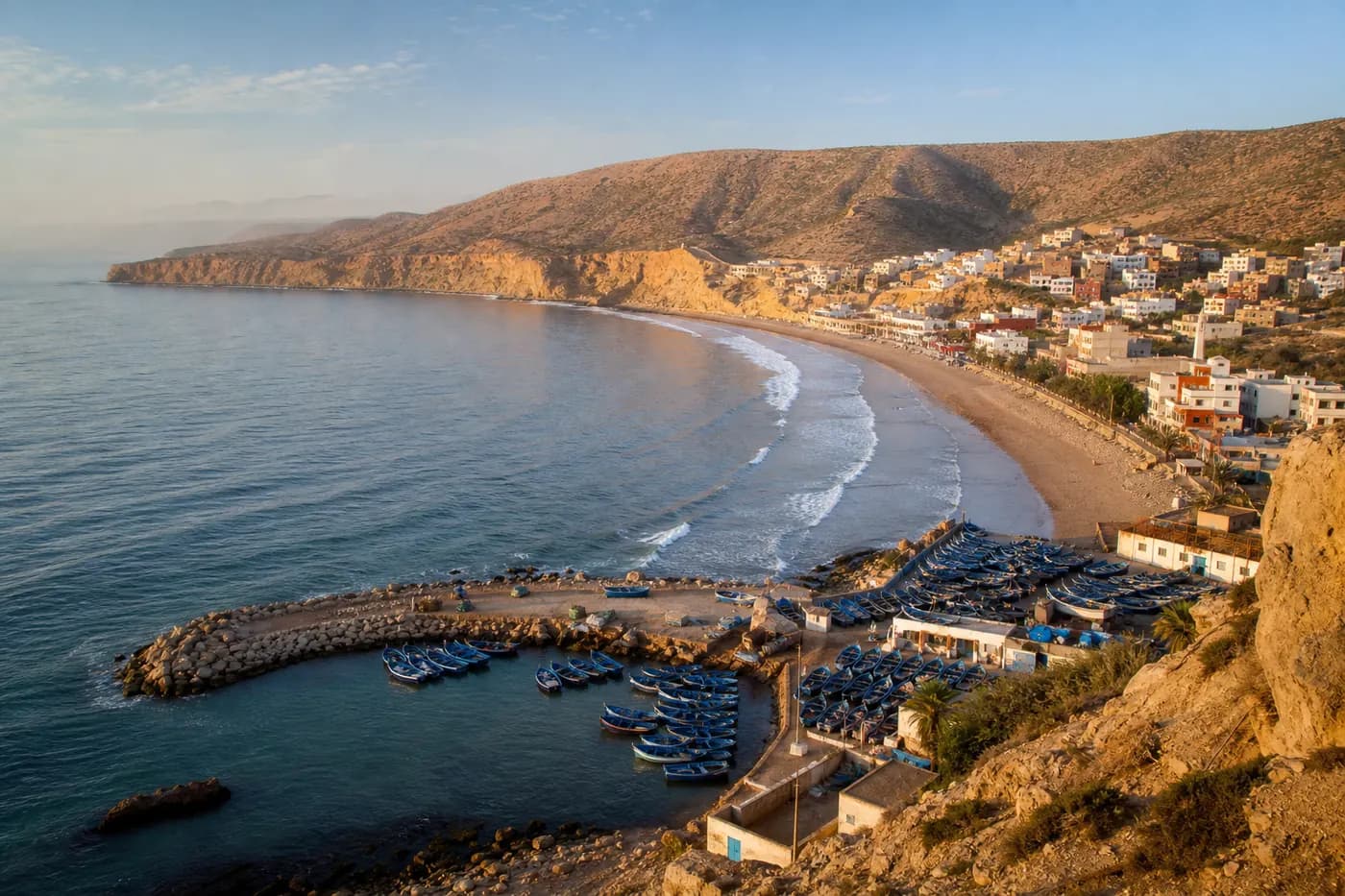
In the other direction, about forty-five kilometres south of Agadir, Tifnit beach contrasts with the northern tourist hubs. Framed by a small fishing village, a large sand dune and a marabout perched on the rock, it offers striking natural beauty and welcome solitude outside peak season.
The drive from Agadir goes via Inezgane, then National Road 1 toward Tiznit, with a turn-off to the coast. Signage from the main road is not always clear: a GPS or detailed map is essential. The beach itself has almost no infrastructure, which preserves its wild character and authenticity.
Explore Agadir’s beaches freely
Explore the Agadir coast at your own pace
Agadir’s main beach is easy to reach from the centre, but Taghazout, Imourane, Imi Ouaddar, Imsouane and Tifnit need a road trip. Choose car rental in Agadir that fits your stay and plan beach stops without relying on public transport times.
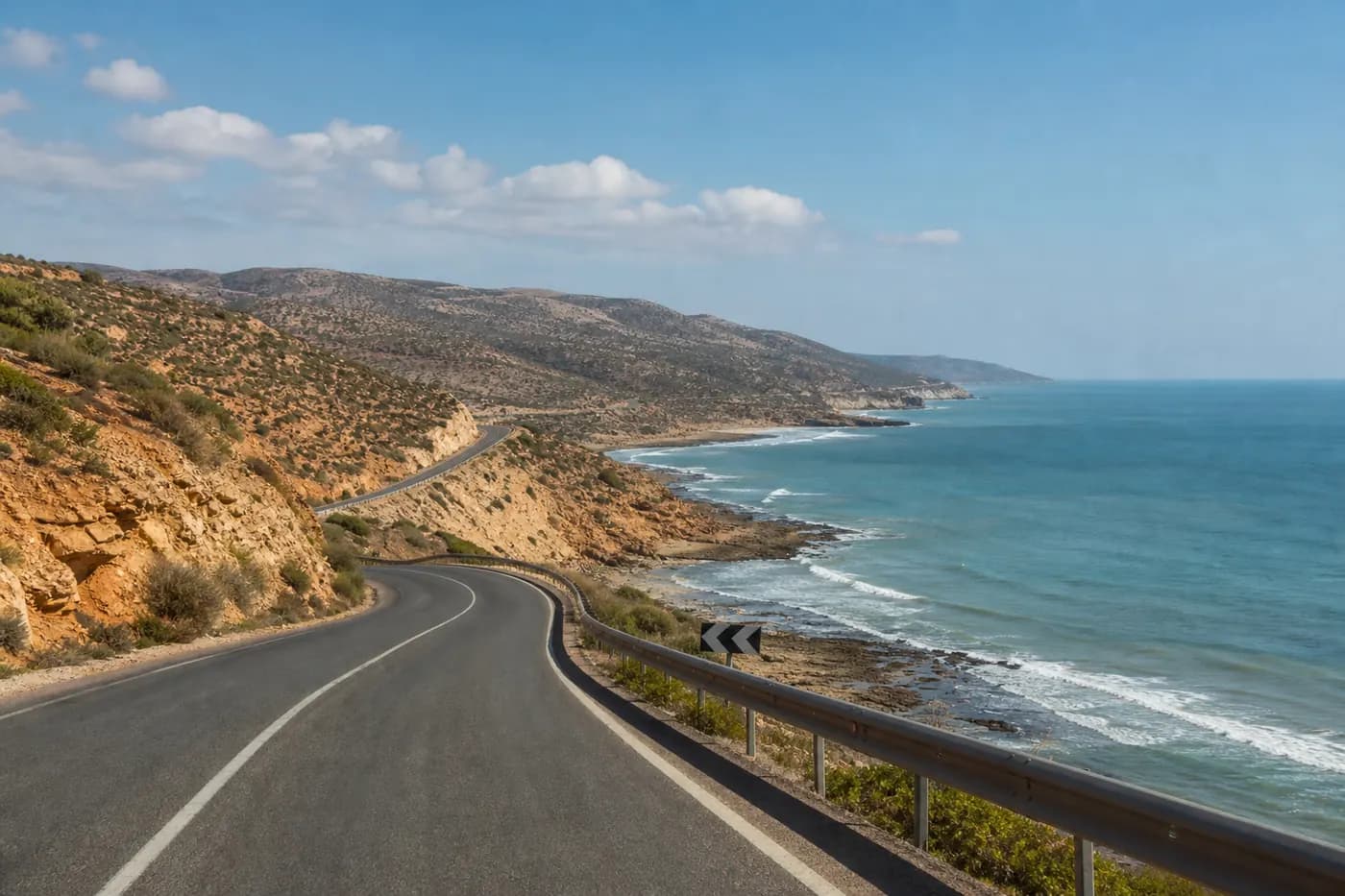
A one-day itinerary on Agadir’s north coast
The coastal road between Agadir and Taghazout is perfect for a day trip, with several stops depending on what you fancy. Here is a suggested plan to make the most of this varied shoreline.
Morning: Agadir, Anza and Aourir
Start with an early walk on Agadir’s main beach before the crowds arrive, then head north to Anza to watch the fishing harbour. Continue to Aourir: if you are there on a Sunday, stop at the banana market for fresh fruit from local growers. Banana Beach below the village is ideal for a first swim of the day in a natural, less crowded setting.
Midday: Imourane and Tamraght
Continue to Imourane for lunch. Before you sit down, detour to Devil’s Rock for the cliff-top view. Le Navire Imourane serves seafood with an ocean view — an ideal midday stop before carrying on north.
Afternoon: Taghazout and Imi Ouaddar
In the afternoon, reach Taghazout and soak up the village atmosphere: colourful lanes, terrace cafés and surf spots facing the Atlantic. On the way back to Agadir, stop at Imi Ouaddar for a last swim in calmer water. Allow about thirty minutes from Taghazout to Agadir along the coastal road.
Can you visit Agadir’s beaches without a car?
Agadir’s main beach is reachable on foot or by taxi from any central hotel. Beyond the bay, though, public transport becomes limited and awkward if you want to combine several stops in one day.
What you can do without a car:
- Walk the full length of Agadir beach from the corniche;
- Reach Taghazout by shared grand taxi from Agadir (about 30–40 minutes);
- Take a bus or taxi to Aourir and Banana Beach from Inezgane;
- Join hotel-organised excursions to Imsouane or Tifnit.
To combine several beaches in one day, stop freely along the coastal road or reach Tifnit, rent a car in Agadir remains the most flexible, comfortable and often most economical option over a longer stay.
Which vehicle for exploring the Agadir region?
For the main coastal road between Agadir and Imsouane, any standard passenger car works. The road is paved and in good condition for most of the journey. A compact economy model is plenty for Taghazout, Imourane, Imi Ouaddar and Imsouane. For a family stay or more luggage, a roomier boot is more comfortable. Browse our fleet to view our cars available in Agadir and find the model that fits your trip.
You do not need an off-road vehicle for the classic routes in this guide. Stay on authorised roads and avoid tracks unsuitable for a rental car, especially toward more isolated access points such as Tifnit.
Practical tips before heading to the beach
Watch the weather and sea currents
The Atlantic coast can have strong currents even when the surface looks calm. On Agadir’s main beach, flags mark safe swimming zones. On wild beaches such as Tifnit, the lack of lifeguards means extra caution. Check marine forecasts before you go, and ask locals or surfers on site about the day’s conditions before entering the water.
Bring a light jacket for the road
Sunshine is strong in Agadir almost year-round, but the sea breeze can feel cool in the morning and evening, especially on the coastal road. Pack high-factor sunscreen, a hat and enough water for excursion days. A light jacket or jumper helps for early starts or the drive back after sunset — temperatures can drop quickly once night falls.
Respect coastal villages and natural spaces
Villages such as Tifnit and Imourane are fishing communities that live by the sea. Be respectful when you visit: avoid swimwear in village streets, leave no litter on the beach or rocks, and respect protected natural areas, especially around Souss-Massa National Park south of Agadir.
Leave nothing visible in your vehicle
At informal parking spots near more isolated beaches, avoid leaving valuables or bags visible in the car. Put bags in the boot before walking away. This simple habit greatly reduces theft risk and lets you enjoy the day with peace of mind.
When to visit Agadir and its beaches?
Agadir enjoys remarkable sunshine year-round. Summer temperatures on the coast typically sit between 22 and 28 °C, tempered by the Atlantic breeze. Winter is mild, with many sunny days and temperatures between 15 and 22 °C — which makes Agadir appealing even outside the summer season.
Peak tourist season (July–August) is the busiest time on the main beach and in Taghazout. Spring (March–May) and autumn (September–November) often strike the best balance of good weather, manageable crowds and favourable surf swell.
For surfers, autumn–winter (October–March) brings more regular, powerful Atlantic swells from the north. For families and swimmers, summer remains ideal despite higher numbers on the most accessible beaches.
Discover Agadir beyond its main beach
Agadir is more than a classic resort. Its bay, marina, Kasbah, markets and Amazigh culture offer plenty of variety during a stay. The city is also an excellent base for exploring the Atlantic coast — north to Taghazout and Imsouane, or south to Tifnit and Souss-Massa National Park.
If you want to continue north, our guide to visiting Essaouira and its surroundings covers the essentials of the City of the Trade Winds: its ramparts, fishing harbour, Sidi Kaouki beach and day trips from the medina.
In a few days you can discover Anza, Imourane and Taghazout beaches, then continue to Imi Ouaddar, Imsouane or Tifnit. Having a car lets you plan each outing around the weather, choose beaches that match your mood and explore coastal villages without being tied to a fixed tour schedule.
Plan your coastal road trip around Agadir and browse our available fleet.