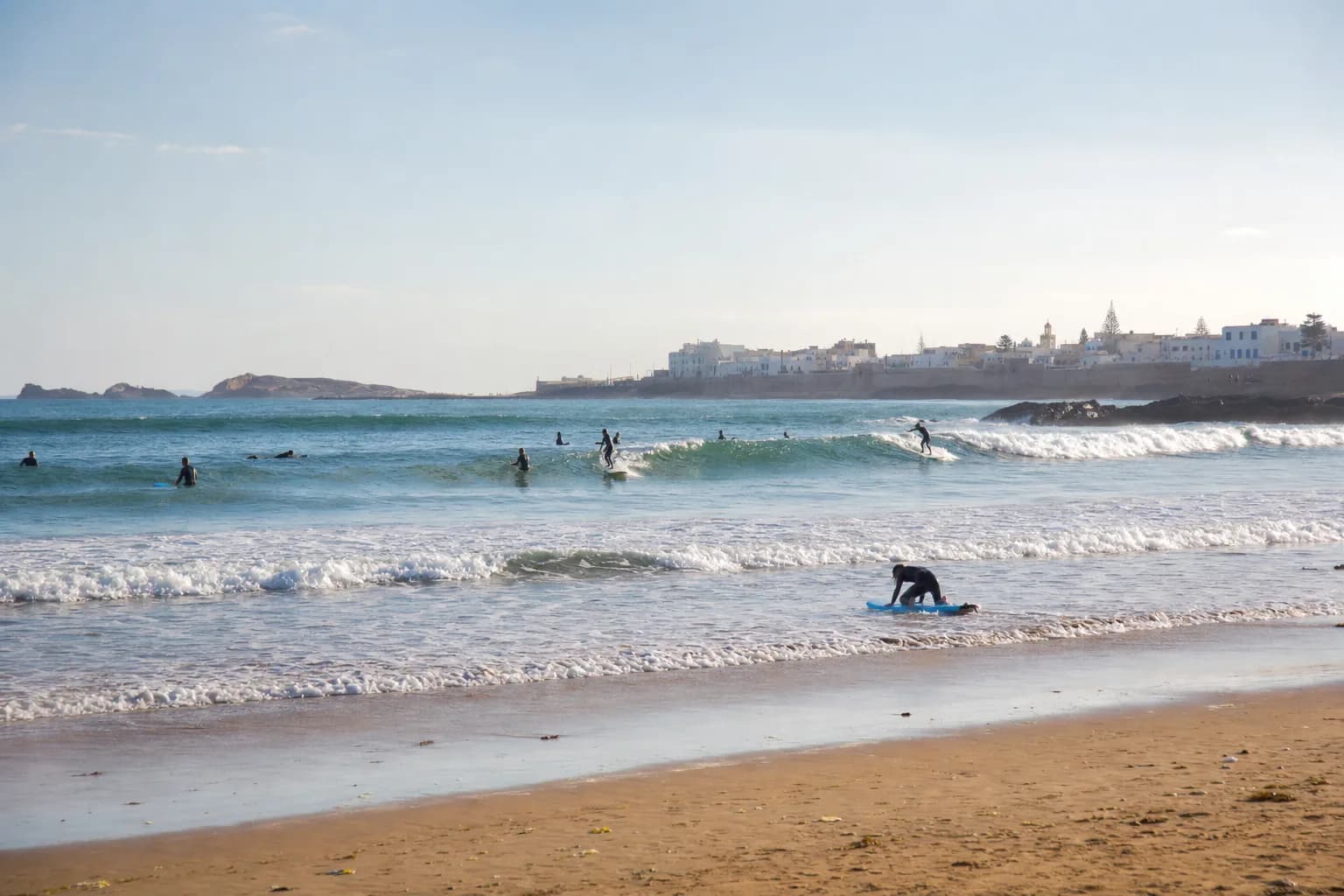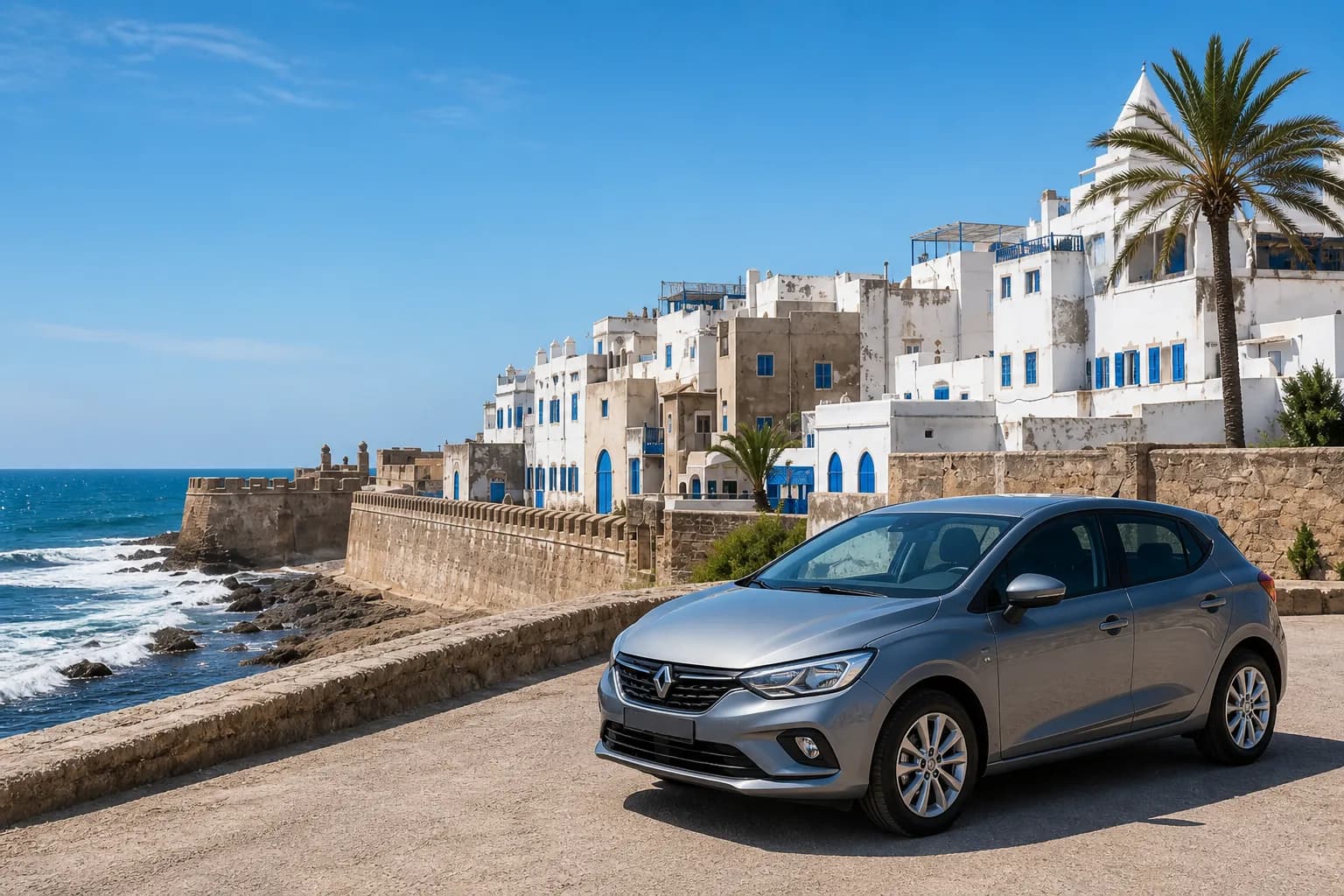
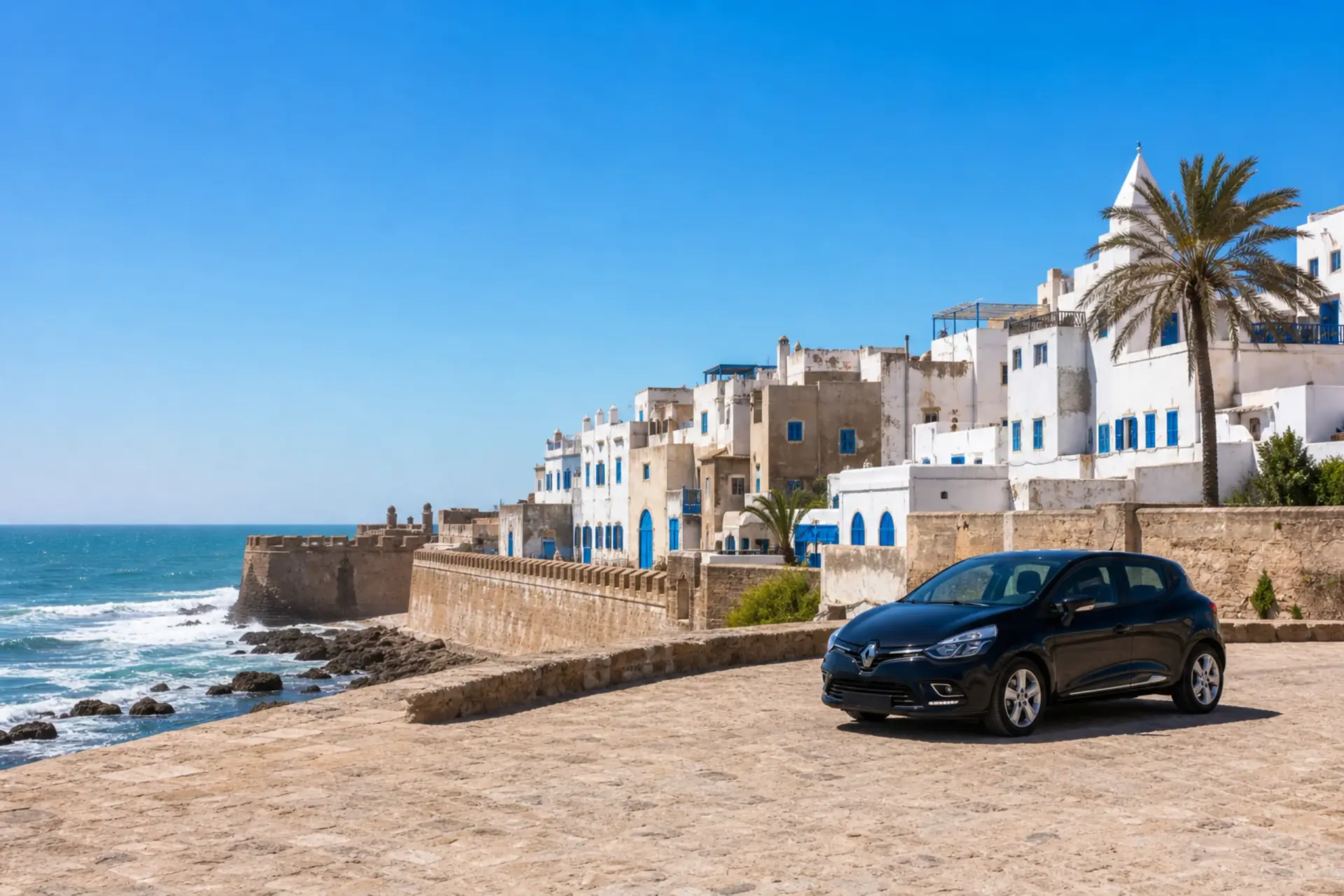
Set on Morocco’s Atlantic coast, Essaouira immediately charms visitors with its ramparts, white houses with blue shutters, lively harbour and peaceful atmosphere. Formerly known as Mogador, the city has a different identity from Morocco’s larger destinations: here the pace is calmer, the ocean is always present and the wind accompanies almost every walk.
To visit Essaouira is to discover a medina full of history, watch fishermen return to port, walk past the old cannons of the Sqala and admire the Purpuraires Islands from the beach. It also means driving out to villages, wild beaches, rural markets and landscapes that are still little frequented around the city. For that, car rental in Essaouira is one of the easiest ways to explore the province at your own pace.
Essaouira, a historic city open to the Atlantic
From Mogador to the city of today
Essaouira’s medina was built in the 18th century under Sultan Sidi Mohammed Ben Abdallah. The aim was to create a royal port capable of developing trade between Morocco, sub-Saharan Africa and Europe.
The city was laid out according to a plan combining European military architecture of the time with Moroccan urban traditions. This organisation, still visible in the streets, gates and ramparts, gives Essaouira a unique character among Morocco’s historic towns.
Essaouira’s medina is today listed as a UNESCO World Heritage Site.
Over the centuries, Essaouira became a meeting place for Amazigh, Arab, African, Jewish and European communities. This diversity is still reflected in its architecture, music, crafts and cuisine.
A cultural identity that remains alive
Essaouira is more than its monuments. The city is also known for Gnawa music, art galleries, thuya wood craftsmanship, carpets, jewellery and small workshops hidden in the medina. Walking its lanes, visitors discover an inhabited, authentic town where traditional shops sit beside cafés, restaurants, riads and cultural spaces.
What to see in Essaouira’s medina?
Most monuments in the historic centre can be discovered on foot. Take your time: the charm of the medina lies as much in its famous sites as in its small streets, covered passages and ancient gates.
The medina and its white-and-blue lanes
Enclosed by ramparts, Essaouira’s medina is relatively easy to walk. Main streets help you find your bearings quickly, while secondary lanes lead to workshops, markets and quieter squares.
Bab Doukkala and Bab Marrakech are among the main entrances to the historic centre. Inside, visitors can explore the souks, the Kasbah quarter, the former Mellah, consular houses and many craft shops.
The Kasbah Sqala and its old cannons
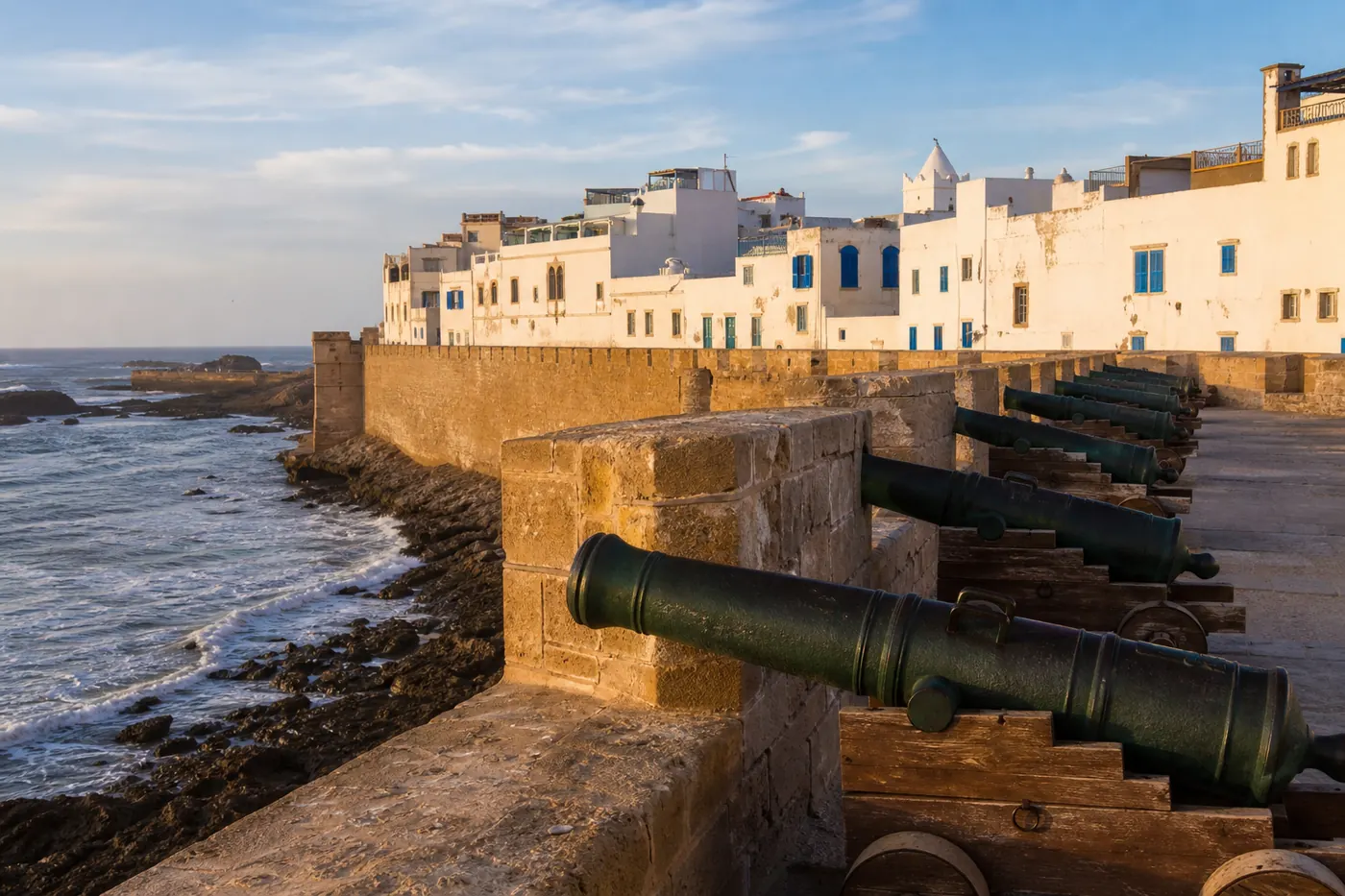
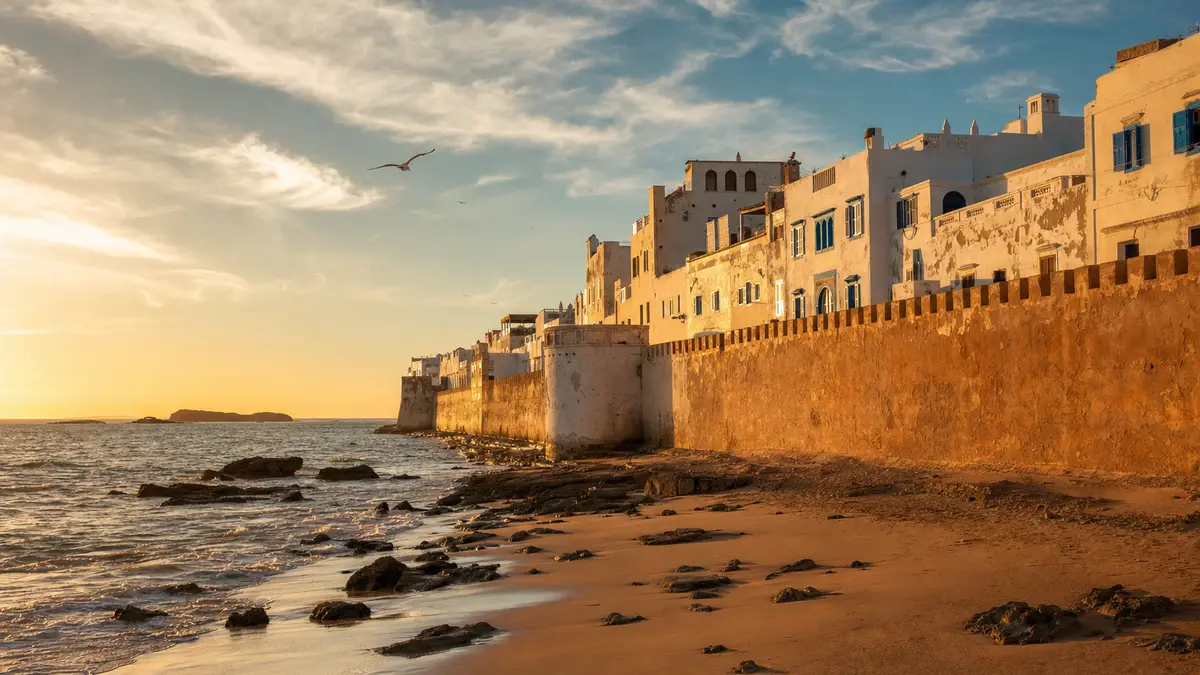
The Kasbah Sqala, also called the City Sqala, is one of Essaouira’s most photographed places. Built to protect the city from sea attacks, it now offers a spectacular walk above the ocean.
A row of old cannons faces the Atlantic. From the ramparts, the view stretches over rocks, waves, medina houses and the islands offshore.
When is the best time to visit the Sqala?
Late afternoon is especially pleasant. The light softens, the walls take on a golden colour and sunset completely transforms the landscape. The Sqala is very exposed to the wind, though. Even on a fine day, a light jacket or windbreaker can be useful.
The Port Sqala
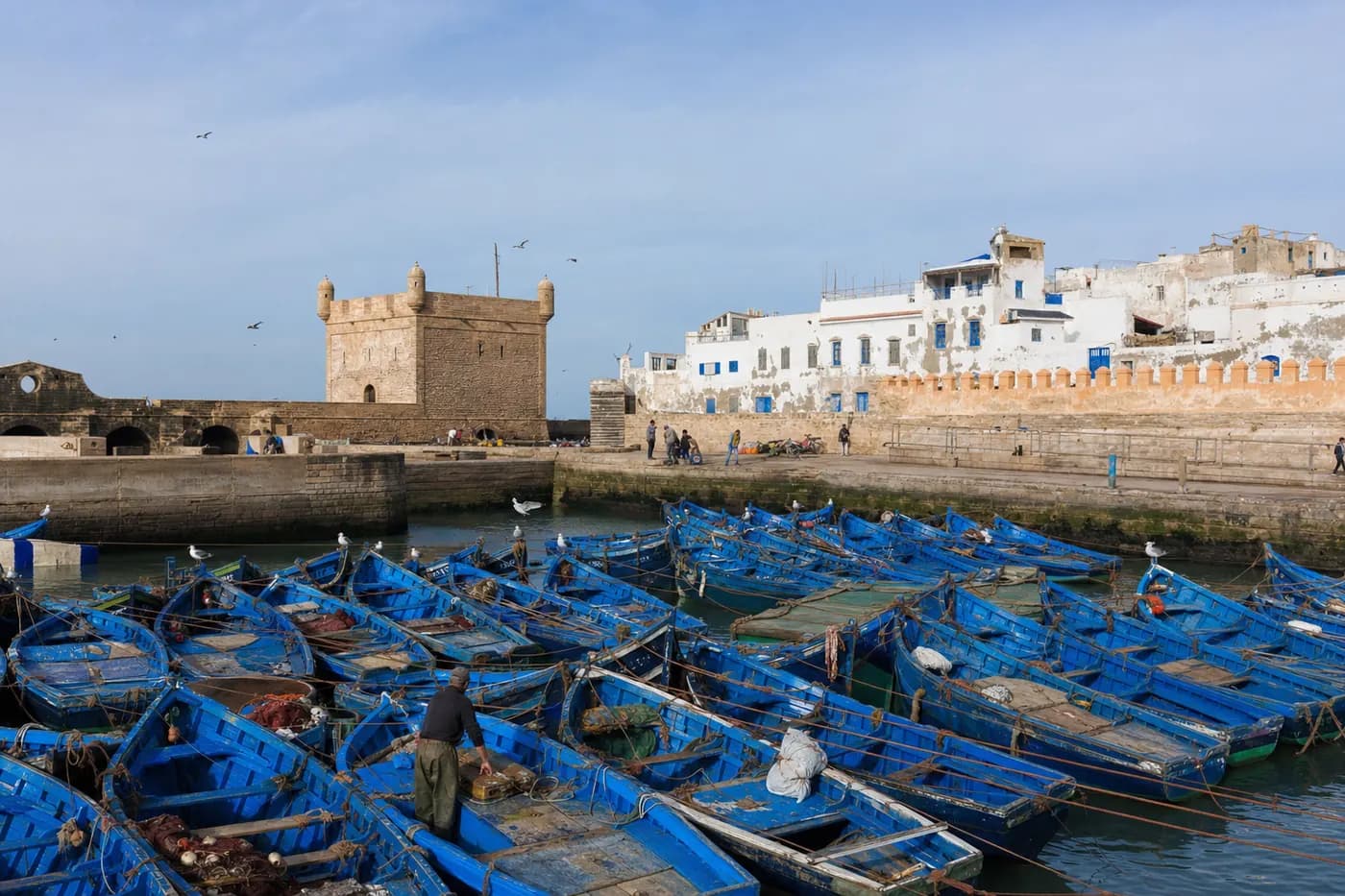
At the other end of the fortifications stands the Port Sqala, recognisable by its monumental gate and stone towers. It overlooks the entrance to the fishing harbour and offers a remarkable view of the blue boats, ramparts and the city’s seaward façade. This place helps you understand the strategic role Essaouira once played in maritime trade.
Essaouira’s fishing harbour
The harbour is one of the liveliest places in town. From early morning, fishermen unload their catch while seagulls wheel over the quays and traditional boats. Visitors can watch boats return, buy fresh fish or simply walk along the quays. The contrast between blue boats, stone fortifications and white medina houses creates one of Essaouira’s most iconic images. Nearby, Place Moulay Hassan is a natural link between the harbour, the beach and the old town. It hosts terraces, artists and various events throughout the year.
Mogador Island and the Purpuraires Islands
Facing the bay lies the Mogador archipelago, also known as the Purpuraires Islands. The largest island is generally called Mogador Island. These islands are an integral part of Essaouira’s landscape and history. In antiquity they were linked to the production of a purple dye obtained from marine shells. Today the archipelago is a protected natural area home to several bird species. Access is therefore not free as on a regular beach. The islands can be admired from the Sqala, the harbour, the corniche or Essaouira beach.
What is the weather like in Essaouira?
A mild climate thanks to the Atlantic Ocean
Essaouira enjoys a moderate climate for much of the year. The ocean’s influence limits summer heatwaves and generally makes winters milder than in Morocco’s inland regions.
Summer days are often pleasant, while evenings can be cool. In winter and spring it is better to bring a jacket, especially for walks near the ocean.
A city known for its wind
Wind is part of Essaouira’s identity. Trade winds blow year-round with varying intensity. They are generally stronger in spring and summer, though conditions can change from day to day. These winds have made Essaouira a popular destination for kitesurf, windsurf and surfing. The city’s long beach also offers plenty of space to walk, ride horses, take a camel ride or simply watch the sunset.
What to visit around Essaouira?
The historic centre is easy to explore on foot, but several interesting places lie outside the city. To reach beaches, villages and rural markets without depending on transport schedules, hire a car in Essaouira. A rental car gives you the freedom to explore these places on your own schedule.
Diabat, between dunes, river and history
A few kilometres south of Essaouira, Diabat is a small village near the Oued Ksob, dunes and the beach. The area is appreciated for its open landscapes, horseback rides and quiet atmosphere. The ruins of the old Dar Sultan palace, partly covered by sand, also give the place a mysterious character. Diabat can easily be included in a few-hour outing from Essaouira.
Sidi Kaouki, a wild beach south of Essaouira
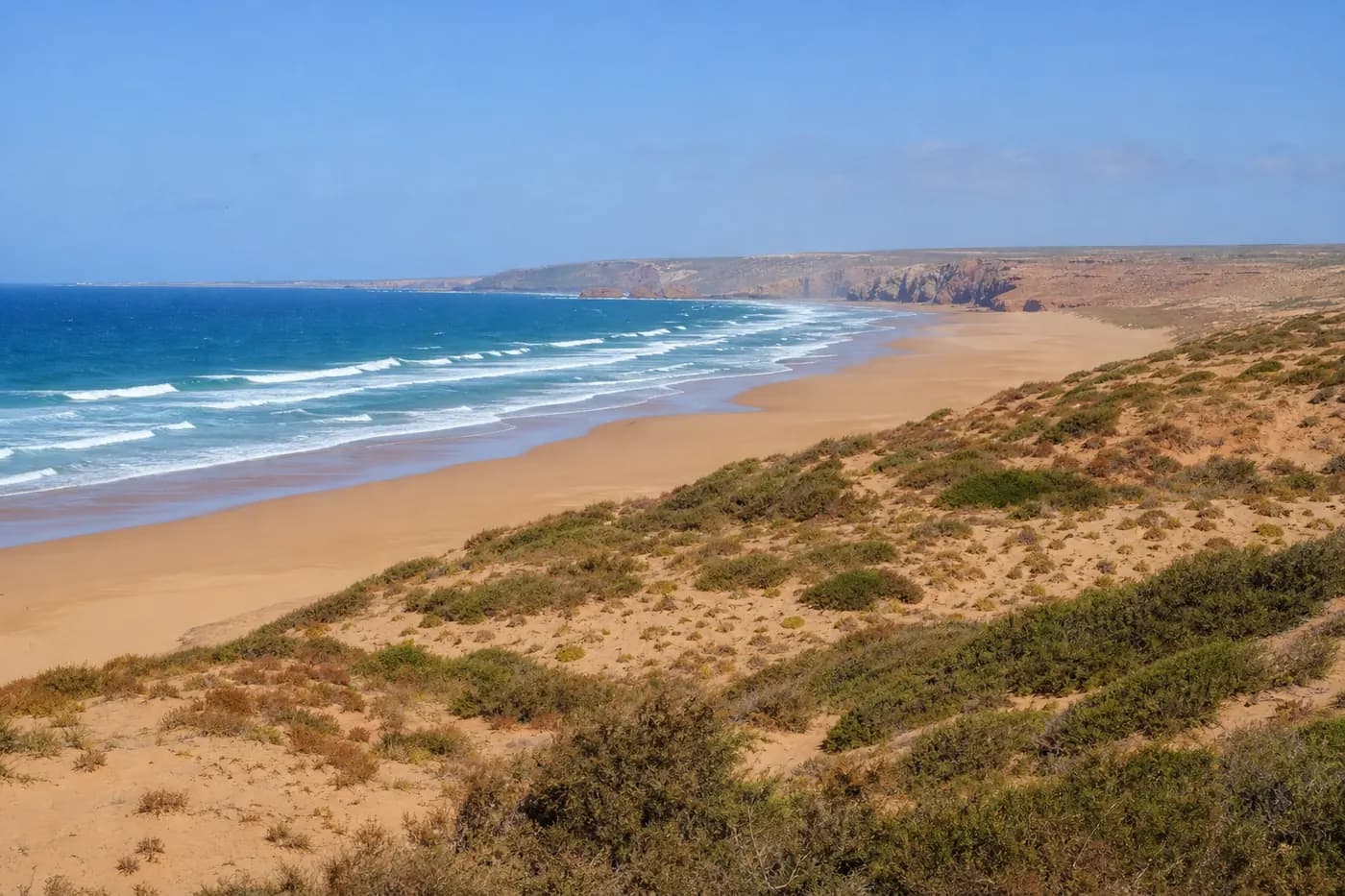
About a half-hour drive away, Sidi Kaouki is one of the most popular excursions around Essaouira. The village is known for its long beach, waves, surf schools and relaxed vibe. Unlike the beach in front of the city, Sidi Kaouki’s shoreline is wilder. Visitors can spend the day there, have lunch near the beach, walk along the ocean or continue towards other small coastal villages.
Had Draa market
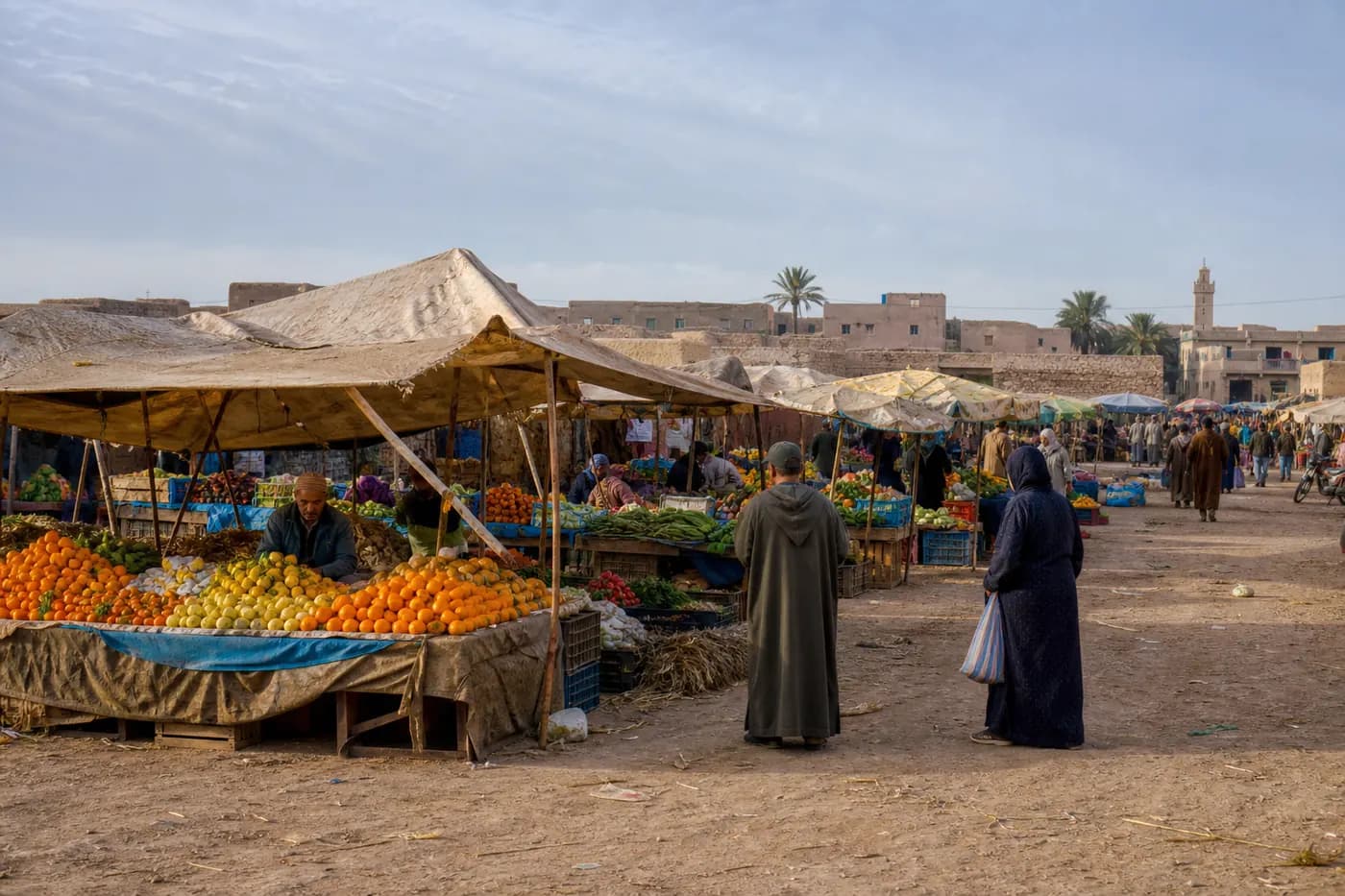
Every Sunday, Had Draa hosts one of the most important rural markets in Essaouira province. About 30 kilometres from the city, it brings together locals buying and selling vegetables, cereals, spices, livestock, craft products and everyday goods.
This market offers a very different experience from the medina’s tourist souks. It lets you observe rural economic and social life in the region. The drive from Essaouira usually takes 25 to 35 minutes depending on the route and traffic. It is best to arrive in the morning, when the market is most active.
Ida Ou Azza and the salt landscapes
For travellers looking for somewhere less known, the Ida Ou Azza area has landscapes linked to traditional salt extraction. In some salt pans, brine is directed into basins where evaporation allows the salt to be harvested. This old activity is part of the rural economic heritage of Essaouira province.
Ida Ou Azza is further from classic tourist circuits. Before going, check the road condition, access and the exact location you wish to visit.
Explore the surroundings of Essaouira by car
A rental car makes coastal road trips simple. Delivery and collection fees depend on the selected location and are shown in the official price table and booking form.
Explore Essaouira and its surroundings freely
Diabat, Sidi Kaouki, Had Draa and the villages of the province are easier to reach with a rental car. Choose a local car rental agency that suits your stay and plan excursions without relying on public transport schedules.
How far is Essaouira airport from the city centre?
Essaouira-Mogador Airport lies southeast of the city, about 15 to 18 kilometres from central Essaouira depending on the route and exact drop-off point.
The journey to the centre usually takes 20 to 30 minutes depending on traffic, your accommodation address and the route chosen.
Picking up a car directly at the airport makes it easy to reach:
- Essaouira city centre;
- hotels and riads outside the medina;
- Ghazoua and Diabat;
- Sidi Kaouki;
- roads towards Agadir or Marrakech.
To visit the medina, it is better to park outside the ramparts and continue on foot. Rent a car at Essaouira Mogador Airport with Mz Agency — a local car rental agency — to benefit from free delivery at Essaouira-Mogador Airport (ESU); fees for other locations are shown in the booking form.
A two-day itinerary to discover Essaouira
Day one: heritage and old town
Start the day at the fishing harbour and the Port Sqala. Then cross Place Moulay Hassan before entering the medina. Continue towards the souks, craft workshops and the Kasbah Sqala. In the evening, head to the beach or the ramparts to watch the sunset facing the Mogador Islands.
Day two: coastal excursion by car
Leave in the morning for Diabat to see the dunes and Oued Ksob landscapes. Then continue towards Sidi Kaouki for lunch and a few hours by the ocean. If the second day falls on a Sunday, adapt the plan by starting at Had Draa market before returning to Essaouira.
What to do with an extra day?
Travellers with more time can continue towards provincial villages, argan cooperatives, Imsouane or the salt pans of Ida Ou Azza.
Practical tips for visiting Essaouira
Always pack a light jacket or windbreaker, even in summer. The weather can change quickly between sheltered medina streets and areas exposed to the ocean.
For trips around the city, leave in the morning if possible and keep enough fuel, especially on rural roads. Respect speed limits and watch for animals, bicycles and farm vehicles near villages.
Finally, do not try to see everything quickly. Essaouira is a city best discovered slowly — a walk on the ramparts, lunch near the harbour and a few improvised stops along the coast.
Discover Essaouira at your own pace
Essaouira combines remarkable heritage, a living culture and very varied natural landscapes. Its medina, ramparts, harbour, beach and Mogador Islands already fill several days.
But to really understand the region, you also need to leave the city, reach Diabat, follow the coast to Sidi Kaouki, visit Had Draa market and discover the province’s villages.
Renting a car lets you organise these excursions freely, choose your own schedule and stop wherever catches your eye. It is one of the best ways to discover Essaouira and its region comfortably, without limiting your stay to the historic centre.
Plan your trip today and browse our range of available vehicles.